
A gripping new novel is a wild, brilliant takedown of race, greed and the NCAA’s unpaid labor system
Mississippi Blue 42 | Eli Cranor | Soho Crime (384 pages)
What if a thriller could double as a civil rights case brief and still make you laugh?
That’s the high-wire act Mississippi Blue 42 pulls off ( Soho Crime, 384 pages). Former college quarterback turned Edgar-winning author Eli Cranor throws a riotous, pitch-perfect spiral directly into the heart of the billion-dollar college football industry. Set in the Deep South, this isn’t just a corruption caper. It’s a wild takedown of America’s exploitive labor system for student-athletes.
The Unofficial Game Plan
The setup is deceptively simple: a hotshot rookie FBI agent (and lawyer) Rae Johnson is sent into football country to investigate payoffs in the fictional University of Central Mississippi’s “suddenly and suspiciously hot football program.” Located in Compson, the once dying Delta town is experiencing an economic boom, as evidenced by the new budget hotels that now ring the stadium, raking in game-day money. What she uncovers is deeper than one scandal; it’s a system.
Oh, and there is also a suspicious death of a young star quarterback, which is not officially in federal agent Johnson’s jurisdiction, as her senior partner continually reminds her. I don’t think it’s too much of a spoiler to say that Johnson ignores him.
Her assignment is getting evidence of a corrupt system of payoffs that is built on unpaid, often injured, mostly Black labor. Boosters, university presidents, law enforcement and corrupt politicians are all in on it. The stakes aren’t just games; they’re futures. And the most sympathetic figure in the whole twisted lineup? Moses McCloud, a college football player whose story gives the novel its soul.
Moses is smart and he’s not going to jeopardize his chance at a good life. No spoilers! But he is trying to dodge bagmen, duffle bags full of cash, DUIs, and any kind of shenanigans that would jeopardize his ambitions. It’s a route to run more harrowing than any on the field. He is well aware that his prospects could be mortgaged, his body could be broken. Through him, Cranor makes the damage real, visceral and potentially unforgivable.
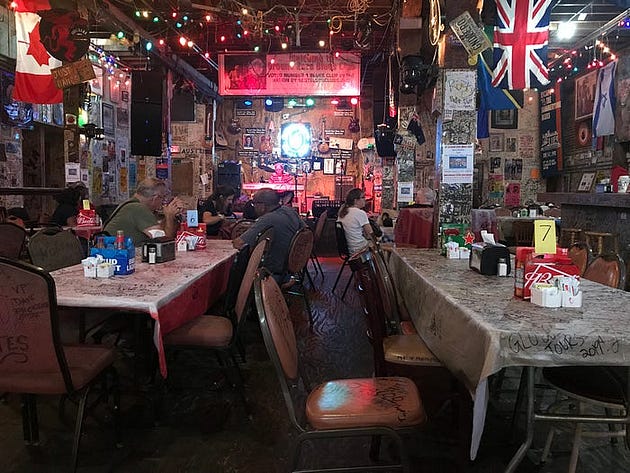
One of the novel’s best scenes happens while Rae Johnson plays pool with Darren, Moses’s friend and mentor, at Morgan Freeman’s Ground Zero Blues Club; a former cotton-grading warehouse turned legendary bar in Clarksdale.
Darren sums up Moses’s dilemma beautifully:
“Craziest damn thing. Kid’s good enough to make it to the NFL, but all he ever talks about is his ‘plan,’” says “How he’s got to keep his GPA up so he can get into vet school.”
Think of Elmore Leonard’s swagger and Carl Hiaasen’s satire through a Southern-fried lens that feels completely of-the-moment. It’s zany, out there, and in the best Hunter S. Thompson sense, takes the reader on a wild trip. So buckle up for the ride. Gonzo, gritty and again, like Thompson, steeped in landscape. Here it is the Clarksdale blues of Mose’s hometown, it channels the sounds of Son House, Muddy Waters and Robert Johnson.
That mythic Crossroads — where Robert Johnson was said to have sold his soul to the devil in exchange for musical genius — haunts this story too. If Moses isn’t at a crossroads, I don’t know who is.
How to Indict a System Without Filing a Motion
Cranor’s timing is spot on. With the NCAA’s $ 2.8 billion antitrust settlement ( House v. NCAA) fresh in the news, the novel reads like a searing piece of social commentary. The action takes place at a pivotal moment, just before college football and other nominally amateur sports were forced to acknowledge that the players who sacrifice their time and jeopardize their bodies deserve a bit of the billions of dollars generated by their labor.
Approved this summer, the settlement ends long-standing restrictions on direct payments to athletes and paves the way for back pay from 2016 to 2024. Starting in 2025, Division I schools can pay up to $20.5 million annually. In short: the exploitation Cranor lays bare is finally being (partially) addressed by the courts.
College football has long been a billion-dollar industry powered disproportionately Black players, basically working for free. Cranor doesn’t just hint at this imbalance — he nails it. Through Moses’s story and Rae’s investigation, the novel shows how the wealth of the system flows upward, while the players, their bodies and futures on the line, are left with little. It’s a stark echo of real-world dynamics the courts are only now beginning to acknowledge.
What makes this indictment so effective is that it’s also a blast to read. Cranor uses a sharp wit and breakneck plotting to make his case, proving that serious social commentary can be served with a side of pure entertainment.
Gridiron Greats (Literary Edition)
Mississippi Blue 42 fits squarely within a specific, brutal literary tradition. Like Peter Gent’s raw insider account in North Dallas Forty, Cranor’s novel exposes the seedy culture and violence beneath the game’s spectacle. It also echoes Frederick Exley’s A Fan’s Notes, which poignantly writes about a devastating hit of Frank Gifford. Gifford later in life suffered from the devastating symptoms of CTE, which we now know is a core part of the game’s human cost. And much like Frank Deford’s Everybody’s All-American, Cranor’s work explores how race and fame collide and curdle, showing how the system of college football is built on a deep and disturbing racial disparity.
Where Mississippi Blue 42 stands out is in its explicit focus on the legal system, using a lawyer-protagonist to expose the systemic rot. This puts it in direct conversation with books like Paul Levine’s Bum Luck, which features a CTE-damaged football player who stumbles through the justice system after becoming a lawyer.
The Real Cost of the Game
Cranor isn’t subtle. The book wants you to be mad. It shows how the injustice of how colleges built dynasties off the backs of young men who would leave school with nothing. Sometimes not even the full use of their bodies. The book makes a forceful case that justice in the form of back pay, health care, education, and acknowledgment are overdue. It lays bare how universities have profited off athletic programs where they didn’t protect and talent they didn’t compensate.
That’s where Mississippi Blue 42 really wins. It’s a thriller, yes. But it’s also a policy critique and a cultural reckoning. All told through character, wit, and violence. It doesn’t preach; it punches. And throws in a few subtle punch lines into the mix.
Capitalism, Cleats and the American Condition
Ina revealing CrimeReads interview with Kevin Canfield, Cranor traces the ideological roots of the novel, linking college football’s shadow economy to the broader American systems of power, race and unchecked capitalism.
“That’s why these ideas of capitalism, competition in college football — they parallel so well with America. These entire infrastructures and social hierarchies were built around secretly paying these kids. That’s truly American too, man.”
This idea is the very heart of the novel. Rae has a revelation while sitting inside AT&T Stadium, aka, “Jerry World,” the billion-dollar shrine to football built by Dallas Cowboys owner and famously bombastic mogul Jerry Jones.
“This was about the players and the game they’d been forced to play. The contest that took place on the field was nothing compared to the battle that went down in Waffle Houses, seedy motel rooms, used car lots, and a laundry list of other skeevy locales. That’s where boys like Moses McCloud had been fighting for so long nobody even saw them as boys anymore. These were young men whose talents had been exploited to pay their coaches’ multimillion-dollar contracts, secure billion-dollar TV deals, and provide highly visible recruiting for their respective universities. College football wasn’t a game at all; it was a business, a completely self-sufficient economy powered by young, mostly Black athletes.”
Overtime: Get Ready for “Florida Green 17”
This novel isn’t about legal fees or courtrooms, although that would be a novel or nonfiction book that I’d definitely want to read. I went down that rabbit hole and learned that the attorneys in the landmark win in House v. NCCA earned $ 750 million in legal fees.
But back to this deeply enjoyable book. In the end, Mississippi Blue 42 isn’t about the grand victories on the field or even a big settlement. It’s about a college kid with a GPA to protect, trying to outrun duffle bags full of cash. That tension between potential and exploitation is where Cranor finds his most devastating truth.
This is just the beginning. As Cranor told CrimeReads, the next book — Florida Green 17 — jumps ten years forward into a world “where everything has changed, where there are no rules… and the veil has been lifted.”
Originally published on Books Are Our Superpower.