
Get in Loser, We’re Building a Pyramid Scheme
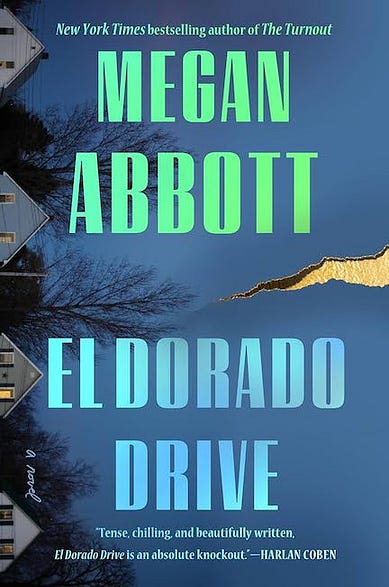
El Dorado Drive | Megan Abbott | G.P. Putnam’s Sons (368 Pages)
It’s Definitely Not a Pyramid Scheme
Let’s be real, any time a pyramid is displayed on a cork board to explain a foolproof way to make easy money, there’s gotta be someone in the room Googling, “Is this even legal?”
Even if your sister says: “Wrong…It’s not a pyramid…It’s a triangle.”
Megan Abbott’s El Dorado Drive mostly sidesteps how smart women blithely moved forward with the scheme. As a legal-minded reader, I had to make a choice early on: either nitpick the plausibility or enjoy the ride. I chose the latter.
Dubbed the ‘Queen of Crime Fiction,’ Abbott is a complete pro. I got stuck on the pyramid scheme, but this page-turner has a lot more going on, including a murder. And, as the title suggests, El Dorado Drive is a smart rumination on the irresistible pull of wealth and its golden promise that, like the mythical city of gold, proves ultimately elusive.
Google It, I Dare You
It turns out this isn’t just a theoretical scenario. Unlike anyone in the book, I googled it! And yes, these pyramid schemes absolutely happen in real life. In 2013, two Connecticut women were sentenced to federal prison for running a strikingly similar “Gifting Tables” scam targeting women. They were convicted of conspiracy to commit wire fraud and defraud the IRS.
And believe me, as a legal fiction devotee, seeing those real-life federal sentences? That’s the kind of meta-textual satisfaction I live for and it made it all the easier to set aside the characters ignoring legal ramifications and truly enjoy the ride — a ride steeped in suburban opulence and $5,000 buy-ins masquerading as female empowerment, with a twist of lime.
Get in Loser, We’re Building a Pyramid Scheme
I was completely obsessed with this novel. Still, I could practically hear the audience yelling, “Get out of the house!” as the women not only fall for the scheme — but luring friends to join at the bottom rung. Fueled by denial, sisterhood (both familial and political), and an unholy amount of vodka (23 mentions; it’s basically a character), they lean all the way in. It’s absurd, it’s maddening — and yet completely mesmerizing.
Because what Abbott gets right doesn’t depend on the dissection of a scheme; it’s the emotional architecture beneath it: fear, pride, loneliness, and the desire to reclaim control and hang on to privilege. This is psychological fiction, not a deposition. The payoff? A darkly funny story.
Sisterhood Has Its Price — $5,000
When Harper moves in with her sister Pam, she’s surprised to find her thriving post-divorce — considering Pam’s ex-husband drained their accounts and stole from their kid’s trust funds. (An act that itself screams of potential civil, if not criminal, repercussions, which is another plot line.)
Harper, broke and adrift, is quickly pulled into the Wheel, a secretive women’s circle promising financial freedom. Their oldest sister, Debra, is already involved.
The plot hinges on new members handing over $5,000 to existing members in exchange for promises of big future payouts. Classic gifting-circle mechanics, barely dressed up. Actually, it’s dressed up. These women throw parties to mark the cash hand-offs (sometimes tucked into gold-lined envelopes) to those at the top of the pyramid at the Wheelers’ bacchanals.
“Can I get you a cocktail?” Beverly asked. “Any clear liquor. I have all the clears.” Clear liquors to match all the pale creams and paper-whites of the upholstery, the wallpaper, the shampooed carpets, the drapes like icicles over windows so clean they squeaked.
What starts as a feel-good club offering women a chance to support one another and make money, spirals into something darker. As the sisters climb the Wheel, so do the risks, until the scheme tips into yet another crime that threatens to bring everything crashing down.
Legal If You Squint
→ Gift, Not Income. Obviously.
This is where my brain’s legal department really started buzzing. Were the sisters and other participants aware of the illegality of the enterprise?
There are inklings of awareness, subtly presented. The group’s manual, for instance, reminded participants that when they “run the Wheel,” the cash they receive is not cash — it’s a “gift” — a magic nomenclature the group used, claiming gifts up to twelve-thousand dollars were tax-free.
Just to be clear. In addition to hiding income from the IRS, the Wheelers were likely violating federal wire fraud statutes which cover schemes using electronic communications to defraud (emails, phone calls, texts).
The women often assured one another that this whole crazy enterprise raking in money was vetted by their husbands.
“Besides, Sue Fox assured them, her husband, a CPA, had reviewed everything. And Caroline Collins’s husband, an attorney.”
While the husbands, some struggling financially themselves, may have turned a blind eye, their chorus wasn’t entirely unified; later, one of the ex-husbands, Doug — a realist if nothing else — says the quiet part out loud in the novel: “You can’t honestly think that thing is legal, can you?”
Subprime Dreams
Set against the backdrop of the 2008 financial crisis, El Dorado Drive is a sharply observed historical novel. As the government scrambles to bail out GM and Chrysler, the Bishop sisters’ husbands (or exes) are facing layoffs, buyouts, and the slow evaporation of their once-certain futures. The collapse of the auto industry isn’t just background noise — it’s the pressure cooker.
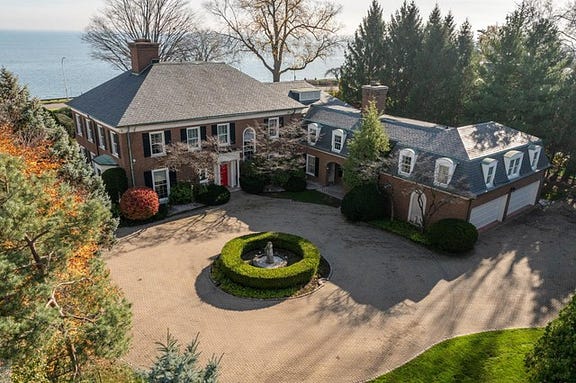
A native of Grosse Pointe, Michigan, Abbott captures the unraveling of this affluent, car-industry-adjacent suburb with vivid, juicy precision, sprinkling the narrative with such fun details: paprika-colored Mercedes, Reed & Barton silver, a Lexus Platinum, Lily Pulitzer sheaths.
Abbott masterfully crafts atmosphere and character, writing with uncanny insight into the intricate, often insular worlds women build — close-knit and clubby. Brimming with unspoken rules. Her sharp eye for the dynamics of female relationships is on display here as it was in her earlier novels: the explorations of competitive ballet in The Turnout, an intensively competitive cheerleading squad in Dare Me, and elite hyper-competitive world of gymnastics in You Will Know Me.
In El Dorado Drive, this competitive and often treacherous dynamic unfolds within the world of suburban scorekeeping. The Bishop sisters desperately strive, trying to hold on to status as marriages, savings, and the American auto industry collapse. Abbott deftly shifts her focus from the ambition and betrayal of youth to an equally sharp, middle-aged version of these themes.
It’s a Slow Burn — But It Delivers
This is not a fast-paced thriller. The narrative simmers. Emotional arcs repeat and some character dilemmas are hit more than once. But if you’re here for a character-driven unraveling — à la Big Little Lies, but with fewer yoga moms and much more financial fraud — this delivers. Don’t expect courtroom drama — expect wine-drunk confessionals, women who volunteer for the Junior League (but really could be running Ford), and a slow-motion collapse you can’t look away from.
As someone who scrutinizes legal plausibility in fiction, even I found myself semi-understanding the characters’ buying into such a delusional scam. Abbott delivers a psychologically cogent examination of why people, even smart ones, fall for such schemes. The combination of financial panic, limited options, a life of entitlement slipping away — plus really, really fun drunken parties — that’s a heady mix.
You’ll finish the novel wondering: what would I do for $40,000 and a dream? And would I bring my sister with me?
Fine Print: Thanks to G.P. Putnam’s Sons and NetGalley for the ARC.