Seven condemned women, a group of contemplative nuns and a legal system whose judgments deserve a second look.
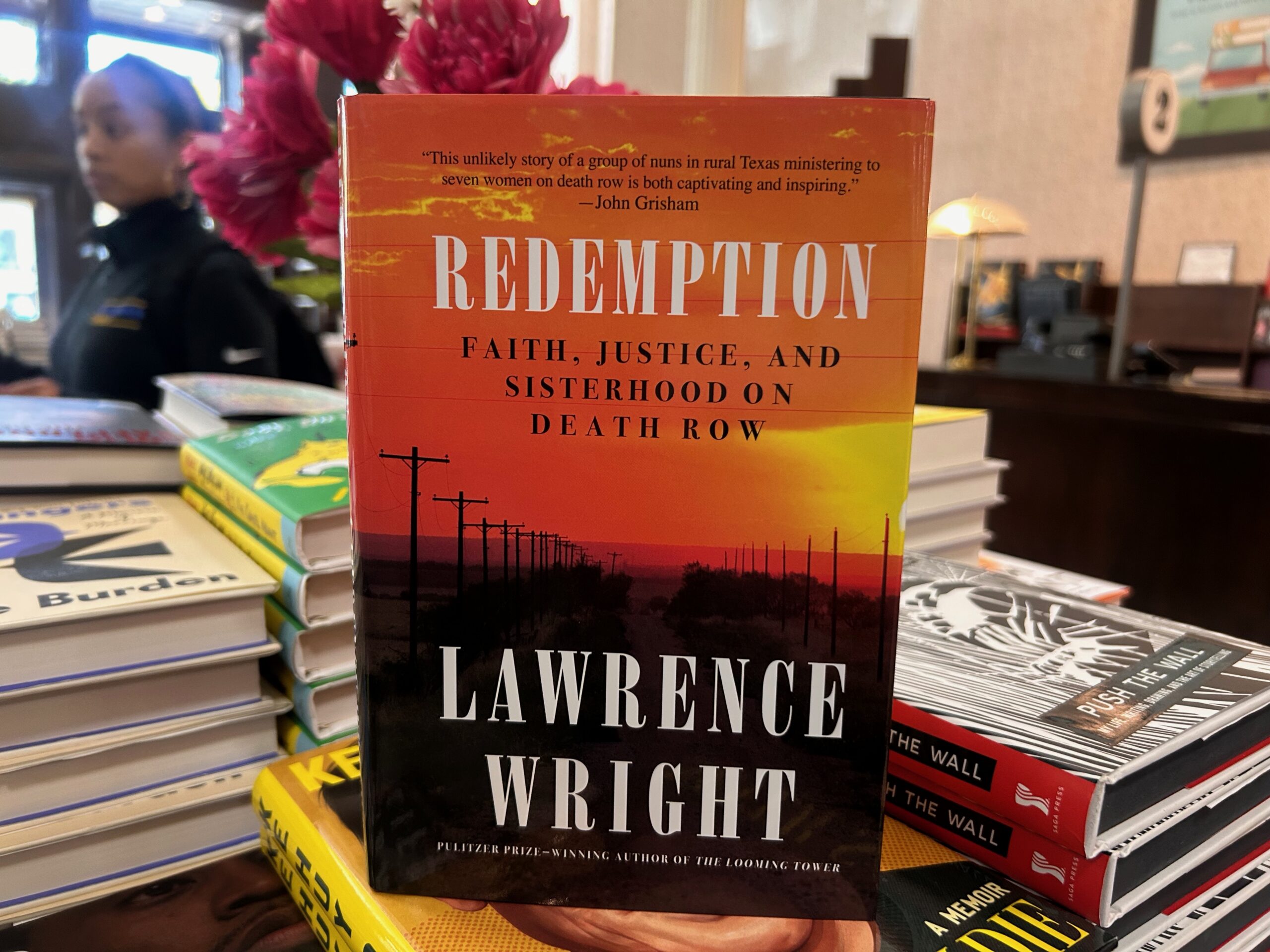
Redemption: Faith, Justice, and Sisterhood on Death Row | Lawrence Wright | Knopf (272 pages)
On September 30, Christa Pike survived two injections of the execution drug pentobarbital. She was hospitalized, then returned to Tennessee’s death row. It would seem an appropriate moment for this country to reconsider capital punishment. Not a chance. Seven days later, the great state of Texas did not blink. It executed Jamaal Howard by lethal injection.
I requested Lawrence Wright‘s new book, Redemption: Faith, Justice, and Sisterhood on Death Row, from NetGalley because it was Lawrence Wright, but expected another well-meaning, well-argued indictment of the machinery of death. That’s fine, I’m here for those books.
Wright offers none of the standard narrative urgency of a wrongful-conviction story, although some verdicts invite scrutiny. Instead, there are seven women on Texas death row, a group of contemplative nuns and no single case driving the story toward exoneration or a dramatic resolution. Like the nuns at its center, Redemption is a quieter, more reflective work. Yet the cumulative effect of Wright’s reporting is devastating; he builds a damning case against capital punishment without relying on the familiar drama of innocence and impending execution.
For Wright, a Pulitzer Prize-winning journalist and novelist, the subject brings together two enduring preoccupations: Texas and religion. In The Looming Tower, his Pulitzer-winning investigation of the origins of Al-Qaeda and the road to September 11, he examined the power of religious fundamentalism. Going Clear explored Scientology and its hold over believers; Saints & Sinners profiled six unconventional religious figures, including a Dallas minister implicated in a notorious criminal case.
The author has also returned repeatedly to his home state. God Save Texas examined its politics, culture and contradictions, while his novel Mr. Texas, about an unlikely state senator navigating Austin politics, was raucous, funny and wonderfully observed. Wright knows the state’s institutions, personalities and peculiarities. Capital punishment, and the religious convictions of those who encounter it, seem especially fitting subjects for him.
An Unlikely Sisterhood
The Sisters of Mary Morning Star, based in Waco, begin visiting the women at the Mountain View Unit in Gatesville, Texas. Wright finds striking parallels between these two forms of sisterhood. The nuns have chosen lives of prayer, seclusion and strict routine; the condemned women live under similarly rigid schedules, spending much of their time alone in prison cells. One group has embraced confinement as a spiritual calling, while the other has had it imposed by the state.
Sister Mary Thomas expects a single visit, but the encounter grows into an enduring relationship. Wright follows the developing friendships while undertaking his own investigation into the women’s crimes, trials and sentences.
Wright does not overlook the victims or the suffering of their families. His argument does not depend on establishing that every woman is innocent. It asks whether the state can administer an irreversible punishment fairly, even when a defendant’s guilt is not in dispute.
The Cards a Defendant Draws
Wright likens the administration of justice to a board game in which defendants draw cards for gender, race, venue and class. The severity of the crime matters, but so do the assumptions jurors bring into the courtroom, the county where a defendant is tried and the lawyer appointed to defend her. In a capital case, the cards can determine who lives and who dies.
Gender presents a particular problem for prosecutors seeking death sentences against women. Cornell law professor Sandra Babcock calls the prosecution’s response “defeminization,” the process of dismantling the jury’s image of a woman as vulnerable or maternal and replacing it with one of intrinsic evil. Wright recounts how police questioned Melissa Lucio for hours about her care of her children, while an officer interviewing her partner commiserated with him about the difficulties of fatherhood.
Race and venue are other cards. Wright documents racial disparities in death sentencing and recounts how Darlie Routier’s trial was moved to Kerrville, an ultraconservative Texas community with a reputation for tough justice. Deer season had just opened, an additional attraction for the lawyers.
The Right to Effective Counsel
Of all the cards a defendant might draw, class may be the cruelest. A person facing execution is entitled to a lawyer, but the presence of counsel does not necessarily mean the defendant will receive an effective defense. The Sixth Amendment guarantees effective assistance; establishing that a lawyer’s performance was constitutionally deficient, however, is another matter.
Wright describes a Texas system in which court-appointed lawyers were often selected through relationships with judges and paid flat fees that discouraged the exhaustive preparation capital cases require. Many of the women were convicted in an era when appointed lawyers might receive $30,000 for a trial and another $5,000 or $10,000 for an investigation that, properly conducted, could cost hundreds of thousands. Wright also reports that appointed lawyers in Harris County could earn as much as a million dollars a year by accepting caseloads too large to manage responsibly.
A capital defense involves considerably more than challenging the prosecution’s evidence. If a defendant is convicted, counsel must present a separate case for why the jury should impose a sentence other than death. This is mitigation, where childhood abuse, mental illness, intellectual disability and family history can become crucial.
Reading Brittany Holberg’s story, I kept thinking her life was one long mitigation case. She was born addicted to heroin because of her mother’s drug use, was molested by a babysitter at four and by ten was being offered drugs by her own parents. She spoke to her defense attorney in a 1997 interview after her arrest. I found myself hoping he used what he learned. Yet Wright indicates that the jury heard very little of the background that might have helped explain the path her life had taken.
The problems don’t end with defense counsel. Wright also examines questionable police practices, unreliable forensic methods and prosecutorial misconduct. Brittany’s trial offers a concrete example. Wright reports that prosecutor James Farren relied on a jailhouse informant who was rewarded for her testimony to elevate a homicide into a capital murder. To establish future dangerousness, he also falsely suggested that Brittany had killed before.
The Final Appeal
In his foreword, Wright describes the book as a final appeal for seven women whose legal appeals have largely been exhausted. It is an appeal not to another court but to the conscience of the reader. And he turns the question of redemption back on society itself. “They have been on the road to redemption,” he writes. “Shouldn’t society be as well?”
The law looks backward, reconstructing crimes and assigning responsibility. The nuns look at women who have spent years, sometimes decades, living under sentence of death. Their ministry suggests that a person can change without being absolved of responsibility, and that human dignity need not depend on innocence. They are not there to adjudicate guilt, examine legal errors or determine whether a prisoner has demonstrated sufficient remorse.
When Wright discusses the troubling circumstances of one woman’s case with Sister Mary Thomas, she explains why she tries not to dwell on evil or culpability. “We just look at who they are now.”
The Fine Print: Thanks to Knopf and NetGalley for the ARC.