
Sociologist Nicole Gonzalez Van Cleve builds a damning case: police have functioned less as crime fighters than, as she writes, “crime fiction writers.”
Crime Fictions | Nicole Gonzalez Van Cleve | Random House (336 pages)
The Waiting Room Never Empties
I first encountered Nicole Gonzalez Van Cleve’s work during the Covid lockdown while taking online fiction writing classes. My novel opened in the waiting room of Brooklyn Family Court, where I had once worked. It is a place where families wait for hearings that may permanently alter their lives, often represented by lawyers they met only moments earlier in a courthouse hallway.
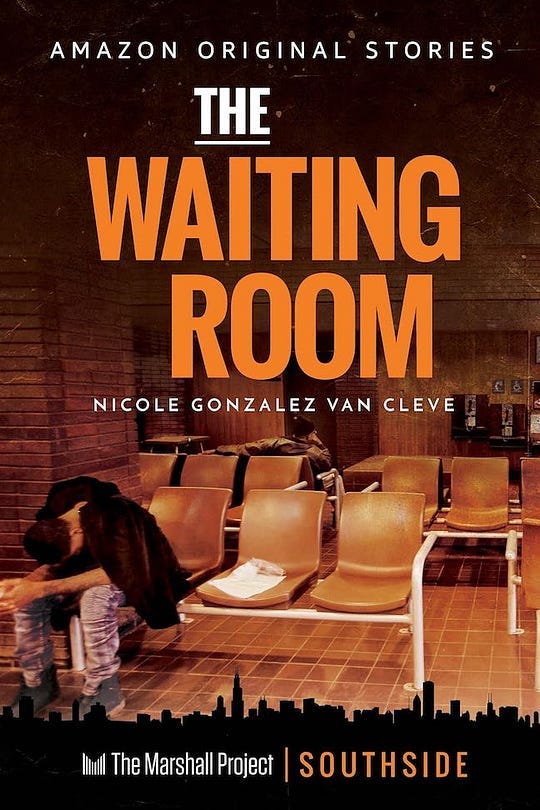
Looking for writers who understood how institutions shape human stories, I found Gonzalez Van Cleve. Her remarkable The Waiting Room, published with The Marshall Project, examined the communities surrounding Cook County Jail and revealed how the harms of incarceration extend far beyond prison walls. When I learned she had written Crime Fictions, I knew I was going to read it.
The State’s Lethal Scripts
Now, Gonzalez Van Cleve has expanded on that work. Like a true social scientist, she is mining the same geography: Chicago. In Crime Fictions: How Racist Lies Built a System of Mass Wrongful Conviction, she builds her case through individual stories that accumulate into a damning pattern: police have functioned less as crime fighters than as “crime fiction writers.” Her core claim is devastatingly simple. Chicago police didn’t just investigate crime; they produced narratives, constructing stories that prosecutors and courts then treated as reality. Once you see that framing, it is hard to unsee it.
Crime Fictions is not a book you breeze through; it is brutal to read. Not because Gonzalez Van Cleve writes badly — she writes exceptionally well — but because she has documented something that leaves you staring into the middle distance, wondering how many “airtight” historical cases were actually manufactured. From engineered confessions to fabricated “wolf pack” cases, the state reverse-engineers the facts to fit a pre-written plot.
The victims are overwhelmingly Black boys and young men from poorer neighborhoods. Proving fabrications are a systemic playbook rather than isolated incidents, the book presents devastating case studies spanning decades. We meet Trevon, a disabled seventeen-year-old snatched from his home without a warrant — an act Van Cleve notes would be considered an abduction in any other context. We see the historical roots of this tactic in the 1961 case of Lee Hester, a 14-year-old Black youth convicted of murdering his teacher based on a coerced confession.
But the absolute nadir of this narrative machinery is the 1998 case of seven-year-old Romarr Gipson and eight-year-old Elijah Henderson, the youngest people in U.S. history to be charged with rape and murder. Despite the fundamental physical impossibility of children that age committing such a crime, police constructed a racist narrative so powerful that it made the unthinkable seem plausible to a public conditioned to see Black children as inherently dangerous.
These are “wolf pack” cases engineered by the state — where shoe prints are ignored, alibis are buried, and vulnerable children are interrogated for twelve hours until they fit a pre-written script.
Complicity in the Courtroom
What makes the book especially damning is not simply police misconduct, but institutional awareness of it. The book is unflinching about who allowed this system to persist: not just police, but prosecutors, judges, and a public conditioned to believe the worst of Black children.
Van Cleve writes that prosecutors and judges knew police lied on the stand and fabricated cases, particularly against Black defendants from poorer Chicago neighborhoods. One judge admitted to her that police created “epidemics” of bogus cases in Black communities. The problem was never merely a few bad actors. The machinery kept moving because too many parts of the system were willing to accept fiction as fact.
As Gonzalez Van Cleve states:
“The police intentionally fabricated criminal cases against Black defendants from poorer areas of the city, and their lies were embedded throughout the legal process — from the arrest to the investigation to the inevitable conviction.”
Reading about the sheer scale of this complicity leaves you deeply grateful for the public defenders and civil rights lawyers fighting in the trenches, to whom Gonzalez Van Cleve rightly gives their due. It also leaves you wanting a whole separate book on how these defenders, reporters, and court staff cope with the crushing weight of the vicarious trauma they absorb every single day.
The Law Loves a Clean Narrative
We are accustomed to the idea that the law requires narrative. In law schools and courtrooms, “legal storytelling” is taught as a legitimate art form — the process of organizing messy, disparate facts into a coherent arc so a jury can understand a human experience.
But Crime Fictions exposes the most nefarious mutation of the law-as-narrative movement. This isn’t defense lawyers organizing facts to advocate for a client; this is the state inventing a plot from whole cloth to ensure an execution or a life sentence.
Legitimate legal narratives are built from the bottom up, anchored by evidence. These police fictions are top-down fabrications. They start with a desired conclusion (a conviction) and then reverse-engineer the “facts,” the coerced confessions, and the buried alibis to fit the plot. The true horror Van Cleve uncovers is how deeply the legal system craves these clean, fictional arcs. The machinery of the court is optimized to process stories, not truth. Because a well-crafted police narrative satisfies the structural needs of a trial, the system accepts it, indifferent to whether the protagonist is an innocent child or a manufactured villain.
What is the Antidote to State-Sponsored Fiction?
During a presentation at UC Berkeley’s Department of Sociology, Gonzalez Van Cleve outlined a conceptual roadmap to dismantle this shadow system through four vital shifts: redefining wrongful convictions as active public safety threats, prioritizing radical dismantling over incremental reform, breaking the police monopoly on truth, and centering the history of the exonerated.
It is a heavy, systemic lift, but it is the only roadmap that offers real protection to the vulnerable. It is exactly the kind of structural change required to protect the next generation of families sitting in the waiting rooms of our courts.
Thanks to Random House and NetGalley for the ARC.
“Thank you Judicial Junkie for this powerful review of Crime Fictions”
— Nicole Gonzalez Van Cleve, Author