
This novel is “Ocean’s Eleven,” if Danny Ocean had just lost a minimum wage job and had $200,000 in student debt
The Payback | Kashana Cauley | Atria Books (356 pages)
The Greatest Heists? The Legal Ones
Political columnist Michael Kinsley once famously wrote about the financial and political corruption of the 1980s savings and loan crisis. Greedy actions were shielded by legal loopholes, and as Kinsley put it: “The real scandal is what’s legal.”
That phrase came to mind as I was reading Kashana Cauley’s terrific pseudo-satirical novel, The Payback (Atria Books, 256 pages), about the student loan debt crisis. The main character — who works in retail at a mall store, mind you — has debt spiraling to $200,000. $200,000!
I stopped reading and Googled, and yes, that’s not fictional.
It got me thinking, rather than glossing over the student debt crisis: How are these mind-boggling student loans even legal? How is it okay to make loans to young students that they will be struggling to pay for decades? And often in fields of study not known for bulging paychecks. Do these loans even satisfy basic fiscal logic? Let’s face it, these are loans that probably should not have been made. But, sure, that’s legal.
Kashana Cauley’s “The Payback” is a Satirical, Funny Yet Serious Look at Student Debt
In this novel, the Debt Police are a legal entity. An enforcement arm of some unnamed administration (or let’s say regime), tracking down, harassing, and beating people who defaulted on their student loans. The Payback turns the dull reality of student debt into a bureaucratic nightmare where Debt Police hunt down defaulters in turquoise uniforms. (The turquoise uniforms are a nice touch.)
But it is more than a satirical device. In the book, a seemingly unaccountable law enforcement agency chases down people who couldn’t afford to repay the six-figure loans they were lulled into taking in the first place. They show up at homes, stores and even a celebration of life gathering. They beat people with batons. All of it, technically, legal.
So, I didn’t expect to laugh while reading about this novel. Student debt is a topic that usually flattens conversation. It’s boring even if it is devastating. But The Payback is full of life. It’s dark and sharp. Somehow, Cauley has written a novel that’s both a satire of an economic system and a buddy-heist revenge fantasy. It’s Ocean’s Eleven. (That is, as the title says, if Danny Ocean had a minimum wage job, three , and $200,000 in debt.)
A Revenge Fantasy with a Legal Twist
The plot follows Jada Williams, a former costume designer now selling clothes at a women’s store in a Glendale mall. I’ve never read such knowing (and loving!) depiction of what working in retail is really like. Folding, cajoling and angling for commissions; Jada can clock customer’s size and pull together a new look in one glance.
Jada’s affection for the mall is captured in this quote:
“I took in the breath of delicious mall air. It had notes of our folded clothes, a faded disinfected aroma I associated with the mall’s interior tile hallways, a bit of fried-food smell from the Chinese place up in the third-floor court, and the first morning note of faux butter from the movie theater right above us.”
That kind of writing is what makes this book sing. You believe the world, even when it gets absurd. I also loved her later side hustle as an online mukbanger (a term I also had to Google). It means eating food loudly and getting paid. That, too, is a real thing.
A Little Help From My Friends
The story shifts from satire to caper when Jada teams up with two coworkers. All three are in debt. All three are angry. And they decide to do something about it. Their mission? Not to pay off the loans. To wipe them clean. It’s part revenge, part protest, part dream. The scheme is wildly illegal, deeply satisfying, and somehow feels… fair. Which is the novel’s deeper trick.
The Payback forces you to ask why this plan, insanely unrealistic, feels more reasonable than what passes for actual policy. Their target is the system and the absurd practice that education should come with lifelong debt.
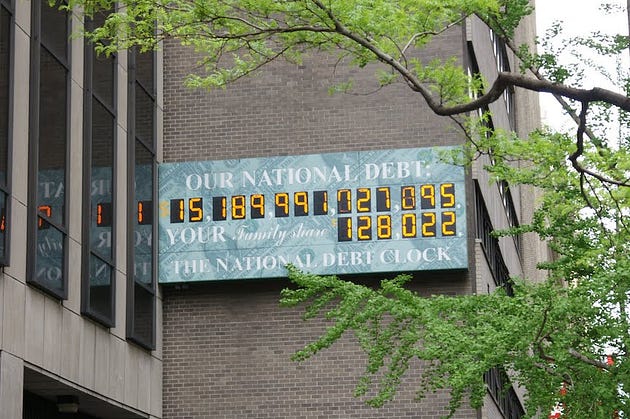
And it’s not exaggerated. Jada’s $200,000 bill may sound extreme, but it’s pretty close to the real numbers for graduate and professional students. (More Googling.) As of 2025, borrowers in the U.S. hold over $1.7 trillion in student debt. Graduate loans can easily pass six figures. Many take decades to pay off. And the system punishes you for being poor — payments balloon with interest. Defaults destroy credit.
So yes, revenge feels justified. And yes, the fantasy of collective action of friends standing up and fighting back? I’m so here for it.
Congratulations, You’re Pre-Approved for Misery
Cauley also nails the legal tension at the heart of the debt debate. In one scene, a Debt Police officer explains the rules:
“And because you aren’t paying your debt,” the cop said, “the contract you signed allows your loan company to take extra-special measures to try and collect the debt if they determine that it’s unlikely you will ever resume payments.”
Jada’s internal reaction cuts through the absurdity:
“And here I’d thought I’d have to commit some other act to hear from the debt cops. A crime on top of my debt. But somebody went ahead and created new cops who could get me for what I’d already done.”
That’s the whole premise. Debt isn’t a crime unless you’re poor and miss a payment? Exactly how is this going to work out for anybody?
The Default Settings Are Screwed
The novel’s central conflict feels especially timely given recent political debates. In the real world, arguments against widespread student debt forgiveness often center on fairness, the cost to taxpayers, and the legality of executive action. Critics have argued that such a policy is unfair to those who paid off their loans or never went to college, that it’s a massive expense to taxpayers, and that it doesn’t address the root cause of rising tuition. These very real-world frustrations.
The satire in The Payback is sharpest because it mirrors policy fights that are very real. When the Biden administration tried to cancel up to $20,000 in federal student debt, the Supreme Court blocked it. For now, real relief would have to come from Congress. So, highly unlikely from a body known more for gridlock than action. That’s what makes Cauley’s fictional solution so powerful.
A Cathartic, Uplifting Read That Knows Exactly What It’s Doing
The Payback is more than clever. It’s cathartic. Yes, it’s satire. But it’s also warm. It’s a buddy movie. And I love a good heist plot. Cauley’s novel, thankfully, doesn’t pretend to have policy answers like proposing a bill. It’s offering something else. A very, very satisfactory Robin Hood-esque revenge fantasy.
The Fine Print: Originally published on Books Are Our Superpower . Thanks to Atria and NetGalley for the ARC.