The outrage at the justice system is the best part.
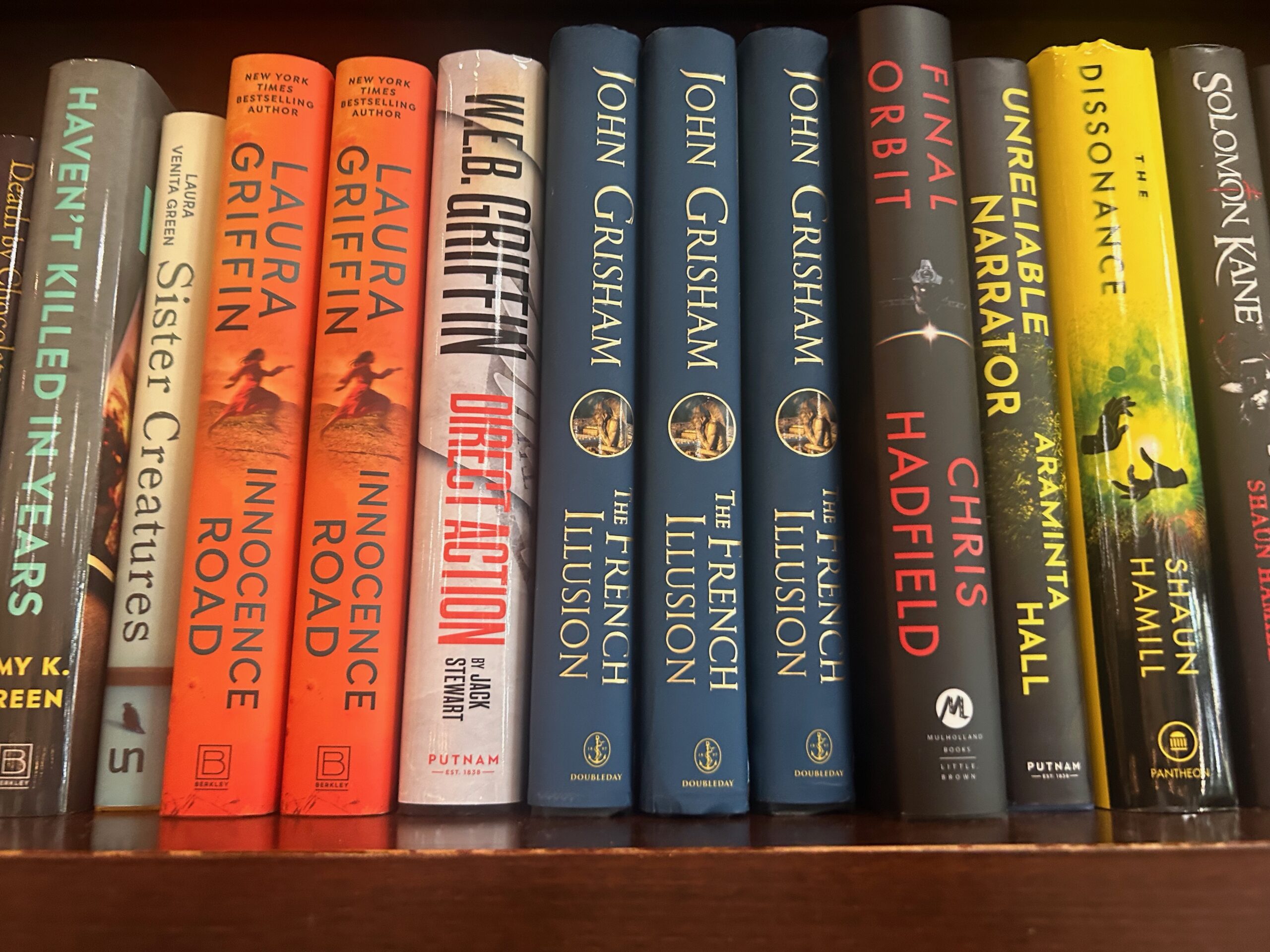
The French Illusion | John Grisham | Doubleday (352 pages)
Two characters in John Grisham’s The French Illusion become devoted readers of John le Carré. They devour the early George Smiley novels, then move on to the later books, “which they found less enjoyable.”
It’s a very meta and sly passage. Here is Grisham, deep into his own extraordinary career, having fictional characters weigh in on whether another master novelist was better in his early years. Make of it what you will.
It made me wonder. Is Grisham bored? Maybe. He has said more than once that le Carré is among his favorite writers, and le Carré, for the most part, walked away from George Smiley in his later years. Grisham doesn’t have a Smiley, but he has the courtroom, and he keeps wandering out of it. Restlessness isn’t necessarily boredom. Sometimes it’s what a master does when the signature territory has nothing left to say. The real question is whether the new territory gets the same care.
This is John Grisham, after all. For nearly forty years he’s published at an astonishing pace, and I’ve followed him through legal thrillers, a baseball novel, the Camino Island books and even his Christmas satire. I’m a Grisham completionist, which means I’ve forgiven him a lot. But last year’s The Widow, his first self-described whodunit, tested my loyalty. (Spoiler alert for The Widow, though I wouldn’t recommend reading it anyway.) As I wrote in my review, Grisham constructed an elaborate mystery around a murdered wealthy woman, then produced a killer from so far outside the field of suspects that the whole enterprise collapsed. A whodunit owes its readers a fair chance to solve the puzzle. Grisham didn’t play fair.
The Spy’s Tradecraft, the Writer’s Craft
The premise of The French Illusion is a good one. Newlyweds Paul and Chelsea Tanner are kidnapped during their honeymoon in France. Paul is a Justice Department lawyer and former Navy JAG officer. The FBI and CIA get involved. There are well-rendered jurisdictional disputes, shattered families, and ethical questions about whether or not to pay a ransom. Grisham knows how to keep pages turning. Unlike The Widow, this time I was genuinely interested in the plot.
What he doesn’t quite manage is the rich, convincing world of the great espionage novels. Le Carré’s worlds were built on reporting. After a tunnel under Hong Kong harbor made a ferry scene in Tinker Tailor Soldier Spy obsolete, a scene he’d written from an outdated guidebook, he vowed never again to set a scene in a place he hadn’t visited. I wrote about that obsession after seeing the Bodleian’s Tradecraft exhibition in Oxford.
I can’t say Grisham didn’t do his homework, but it doesn’t show on the page. There are implausible shortcuts, oddly convenient financial arrangements and dialogue that sometimes sounds as though it wandered in from another decade. At one point a thirty-one-year-old addresses a woman as “darling”; elsewhere it’s “sweetheart.” I kept waiting for someone to call her toots. The plot moves, but the world around it feels thin.
Then there’s the ending. I finished and checked the percentage on my Kindle. Okay, there had to be another fifty pages hiding somewhere. After more than 300 pages of kidnappings, ransom demands and international intrigue, Grisham seemed suddenly in a hurry to wrap things up. Had he gotten bored? Was there a deadline? Did he simply decide he’d written enough?
Apparently I wasn’t alone. Granted, you can always find someone who agrees with your take on line. And, sure enough, on Goodreads, I found readers who otherwise enjoyed the novel bewildered about the abrupt conclusion.
Grisham is still at his best when the justice system goes wrong
Midway through, the book becomes a well-argued and passionate indictment. The target is American institutions, and the anger is pure Grisham. Few writers do moral indignation better.
It would be too much of a spoiler to give away the cause of the outrage in The French Illusion. This is the Grisham of The Chamber, The Confession and The Innocent Man; the author exposing the underbelly of American Justice, blasting wrongful convictions, and highlighting the evils of capital punishment. The espionage machinery can feel borrowed. The outrage doesn’t. His moral indignation has always been part of what makes his best fiction more than an entertaining legal puzzle.
The espionage plot asks who kidnapped these Americans and whether they can be rescued. The more interesting question is what happens when America’s past injustices come looking for it.
Too Big to Review?
To state the obvious, Grisham commands an enormous readership. It makes no difference that his new novels receive relatively little sustained attention from the major papers. The French Illusion earned a mention in the New York Times crime-fiction roundup, not a full review. He obviously does not need critical love to sell books to make the bestseller lists. Libraries tell the same story: the latest release is topping the holds lists.
Perhaps that’s the peculiar freedom of being John Grisham. He has a dependable readership and a publishing operation that doesn’t require a twenty-city tour. But when an author becomes this successful, who is left to tell him the ending needs another fifty pages?
More Novelists Should Do This!
I did thoroughly enjoy The Law Student, a short e-short prequel to The French Illusion that provides the backstory to one of the novel’s lawyers, the one who ends up as bait. I suspect Grisham had the material ready and cut it from the novel. If so, good for him. I wish more writers would let us see what ended up on the cutting-room floor. Grisham has always had a talent for shorter fiction, as Sparring Partners, his collection of three novellas, demonstrated.
So, back to the headline question: is Grisham bored? Is that why he keeps casting around for new genres? I still can’t say.
What I can say is that endings seem to be the problem. He told CBS Mornings he didn’t know the ending of The Widow when he started, and that after his wife told him the first one wasn’t working, he wrote 25,000 more words and a new one. Two books, two ending problems.
But here’s the thank-goodness part. His next book isn’t a spy novel, a whodunit or a series opener. It’s Shaken: The Rush to Execute an Innocent Man, a nonfiction account of Robert Roberson, a Texas father on death row since 2003 over a shaken baby diagnosis that medical experts have challenged. It’s due in April 2027. This is the Grisham who is furious, on the subject he knows best, and with an ending he can’t rush, because real life is still writing it. As I publish this post, Roberson remains on death row.