
…for the age of viral justice and sky-high deductibles
The Uproar | Karim Dimechkie | Little, Brown | 384 Pages
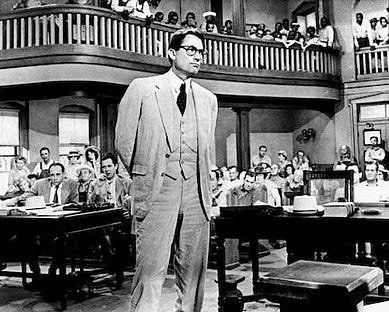
There’s a new legal hero in town, and he’s not standing solemnly in a Southern courtroom, offering quiet moral clarity. Aberto Barbosa is no Atticus Finch — he wields the law like a pressure tool, not a pulpit.
In Karim Dimechkie’s The Uproar,, Barbosa represents the marginalized, challenges systemic injustice, and yes, sometimes nudges the ethical redline. He’s the kind of legal figure we’re starved for — charismatic, idealistic, dangerously effective.
But where Harper Lee’s Finch was the conscience of the justice system, Barbosa is its operator — calculating outcomes, pulling levers, and doing what it takes to win.
The Official Synopsis (and What It Doesn’t Tell You)
According to the publisher, The Uproar centers on Sharif Safari, a white social worker in Brooklyn who believes he’s a good man — aware of his privilege and committed to helping others.
But when his very pregnant wife Adjoua, a progressive Black writer, faces complications and the couple needs to rehome their large, unruly dog Judy, Sharif entrusts the animal to Emmanuel, an undocumented Haitian immigrant. What begins as a simple favor quickly spirals into a viral dispute involving social media and law enforcement.
As tensions escalate, the couple must confront deep questions about race, empathy, and what it really means to be “good.”
That’s the official summary. What it leaves out — unsurprisingly, but to my delight — is the novel’s most compelling force: Aberto Barbosa, a lawyer who enters the chaos not to escalate it, but to steer it toward resolution with unnerving skill and leverage.
(Minor spoilers ahead — mostly on legal strategy and a medical bill that kicks things into high gear. Trust me: it barely scratches the surface of this tense and complex novel.)
A Lawyer With a Cause: Meet Aberto Barbosa
Emmanuel needs a lawyer. Enter Barbosa — whom Sharif had ironically recommended for immigration help. Aberto doesn’t just take the case. He embodies it. A one-man reform movement, Barbosa is exactly what Merjem, Sharif’s boss, once called him: “the rising star in the field.”
He’s got the credentials — a nonprofit legal star, now running his own firm with nonprofit status and a $2 million grant to back it up. He’s building a high-powered public interest shop committed to “higher and more humane standards” that force other firms to up their game. Barbosa is making systemic changes.
To Sharif, Barbosa isn’t just a lawyer — he’s a provocation. Tall, handsome, and infuriatingly competent, he’s also Adjoua’s ex. He represents everything Sharif once hoped to be: principled, persuasive, and successful on his own terms. Proof that someone else managed to hold onto their ideals and make money.
Barbosa knows exactly how to read Sharif — and he’s not above shaping the situation accordingly. The first negotiation between Emmanuel and Sharif begins not in a courtroom but in a mediation session. Sharif is not sure exactly what to expect. Aberto had framed the meeting in therapeutic terms — “to clear the air” — and Sharif, still clinging to a little naïveté, bought it.
“Mediation is more humane than the court system,” Aberto said. “Here, we’re not bound to the hyperspecific, inflexible, inherently dated legal system… The goal is for you, not some judge, to be in control of the outcome.”
Sharif walks in without a lawyer. Or a clue. Emmanuel, meanwhile, arrives with receipts and billing figures. Barbosa got all the parties in a room. But it’s less peace circle, more invoice negotiation.
And Yes, I Checked
We soon learn the insurance deductible clocks in just shy of $15,000. This figure is among the steepest deductibles legally offered for a family plan in New York, and it’s an outrage.
“They’re just over the benefits cliff to qualify [for Medicaid],” Barbosa explains. “Emmanuel would have to quit his airport job to be eligible, and that would mean they couldn’t make rent.”
Emmanuel did what society told him to do: got insured, played by the rules. Now he’s being billed out of solvency.
Installment Plans and Legal Bombshells
Just as Sharif is still treating the whole thing like a misunderstanding to be cleared up over coffee, Barbosa drops a bombshell: criminal charges might be coming.
What Sharif thought was group therapy now has much higher stakes, and Barbosa’s calm pitch should have cut through the illusion:
“It could be a tiny amount every month. It’ll be at least a year before the bills get sent to collection agencies… I’m certain Emmanuel would accept reimbursement in installments.”
Barbosa even games it out — to both parties advantage — how long they have before debt collectors get involved, how he’ll petition to extend the deadline.
Sharif’s reaction?
“The audacity of this prick.”
It’s one of many scenes where the novel balances legal tension with sharp comic timing. The Uproar manages to be funny even as the stakes climb — never in a way that undercuts its seriousness, but often through the dry absurdity of how bureaucracy and ego collide.
Sharif’s corporate-lawyer brother, when finally looped in, scoffs at Barbosa’s tactics: “That’s second-degree extortion right there.” He’s talking about the implied threat — settle the bill or face possible criminal charges. It’s aggressive, maybe a shade unethical. But Barbosa isn’t bluffing. He’s trying to get a good result.
An Unlikely Solution: GoFundMe Justice
Adjoua floats an unexpected idea: crowdfunding. The idea, naturally, originates with Barbosa. He’s still maneuvering — trying to steer everyone toward a resolution that avoids the unpredictability and damage of criminal court.
When Sharif pokes holes in the idea, Adjoua suggests Barbosa might share it with his well-heeled network. Maybe he’d even contribute directly.
“But if we can help them put a significant dent in this bill… then I think it’s worth a shot. Don’t you?”
Sharif’s reaction is less generous: he won’t move forward unless they drop the legal threats, which he still considers a farce.
No Bluffing, Just Leverage
When Adjoua contacts Barbosa directly (yes, she’s still emailing her ex about this case), he replies:
“No bluffing here. I only relay what my clients say. If you and I weren’t so close, I wouldn’t even do that. As an FYI for Sharif: Emmanuel has as much right to go to the police and file lawsuits as anyone.”
Barbosa, for all his smooth talk, isn’t above back-channeling, triangulating, and deploying pressure with finesse. And he deftly makes Sharif look like the reactionary square. Shouldn’t immigrants like Emmanuel be able to seek redress in the criminal justice system?

Barbosa, the Prosecutor?
Eventually, criminal charges are filed. Sharif — cornered, anxious, and out of moves — finally confesses everything to Adjoua’s parents. To his surprise, they respond not with anger, but with calm resolve, emotional reassurance, and the name of a first-rate lawyer.
It’s a quiet turning point. Unlike Emmanuel, Sharif has the luxury of a safety net — family who can step in, write checks, and absorb the fallout. Justice may be blind, but access to protection is anything but equal.
But just as Sharif starts to breathe again — comforted by legal counsel and parental backup — the story takes another sharp turn at his arraignment:
“His attention on them was stolen by Aberto, who, incredibly — but perhaps not unpredictably — sat at the prosecutor’s table, writing on his legal pad.”
Wait — Barbosa is on the prosecution’s side now? In real life, this kind of double-duty would be a serious conflict of interest, potentially triggering a disciplinary complaint. But in fiction, it makes perfect sense: Barbosa is everywhere, maximizing leverage and shaping the legal narrative from all angles. (Yes, this ethical gray area comes up again later.)
“I would like to enter an appearance for Mr. Aberto Barbosa, an attorney in private practice, as co-counsel in this case…”
Why? Because that’s what Barbosa does. He shows up. Everywhere. For his clients. For justice. And sometimes — for control.
Final Verdict: Courtroom Fiction That Puts Your Values on the Stand
There’s much more to The Uproar — family tensions, many relationship talks, finding a caregiver for an aging dog, Instagram justice, and the emotional chaos of pregnancy and parenthood.
Sharif can be frustratingly blinkered — so earnest and self-involved at times, he’s hard to root for. But that’s part of the novel’s bite: Dimechkie doesn’t offer easy moral clarity. He gives us flawed people trying to do good — and asks what any of us would do if we lost our footing.
One place the novel truly shines is in its lived-in portrayal of New York’s nonprofit world, social services, and even its subway lines. The depiction of frontline work is rare and refreshingly complex — likely because Dimechkie has worked in that space. That experience shows. It grounds the legal drama in real moral tension and emotional truth
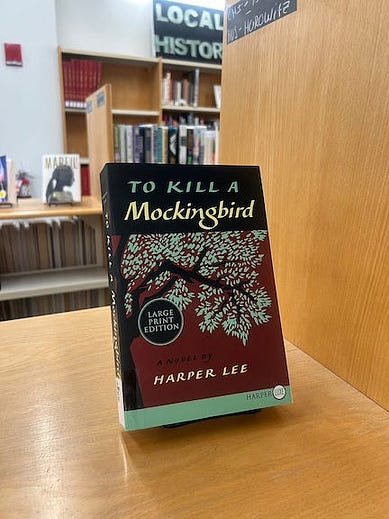
But what lingers is Aberto Barbosa. He’s the Atticus Finch of a messier era — a lawyer who fights hard, plays rough, and keeps his eyes on the prize. Just as To Kill a Mockingbird held a mirror to the ingrained prejudices of its time and asked readers to consider their own moral courage, The Uproar challenges us to grapple with a different, perhaps more modern, set of ethical dilemmas.
Finch’s unwavering moral compass forced Maycomb — and readers — to confront deep-seated racial biases and the very definition of justice, Barbosa’s calculated maneuvers compel us to examine the often-blurry lines between legal effectiveness and ethical purity in a world riddled with systemic cracks.
While Atticus Finch remains a beacon of moral clarity, it’s Aberto Barbosa who feels perfectly suited for the battles of today. When navigating the intricate, often frustrating, machinery of modern justice, you want someone like him in your corner.
I’d hire him in a second.
Fine Print: Thanks to Little, Brown and NetGalley for the advance copy.