
Gary Shteyngart has a singular knack for satirizing American anxieties while simultaneously capturing its enduring hopes.
Vera, or Faith | Gary Shteyngart | Random House (256 pages)
I’d love to see Shteyngart use that gift to go full-on law novel. An update of the endless probate case of Jarndyce v Jarndyce from Dickens’s Bleak House would be most welcome. Or, a martini-swilling, Patek-wearing, Savile Row-clad, Gulfstream G650ER-flying class-action tort lawyer is well within his range.For now, I’m going to settle on a deep dive into a very specific, legally fascinating element in his latest novel, Vera, or Faith: a proposed constitutional amendment that inverts a dark chapter of American history.
While this excellent novel is a soulful exploration of a very engaging 10-year-old Vera’s personal quest to make a friend, heal her fracturing family and learn social cues, I will leave that for other, more well-rounded reviewers. Trust me, if I started quoting from Vera, or Faith, I’d never stop. It’s that good.
When a vote is more than a vote. Or less.
The center of the novel’s dystopian premise is a proposed “Five-Three” amendment to voting rights. As young Vera, the novel’s protagonist, explains to her class, this amendment would grant an “enhanced vote” — counting for “Five-thirds of a regular vote” — to so-called ‘exceptional Americans,’ those who landed on the shores of our continent before or during the Revolutionary War but were exceptional enough not to arrive in chains.”
Shteyngart’s genius lies in this direct, yet inverted, reference to the original Three-Fifths Compromise, found in Article I, Section 2 of the U.S. Constitution. Historically, this infamous compromise counted enslaved individuals as three-fifths of a person for the purpose of congressional representation, effectively granting more power to slaveholding states while dehumanizing an entire population. Heretofore, history has not looked kindly on the whole scheme. But you never know.
In Shteyngart’s future, the mechanism is flipped: a select group, defined by ancestry and perceived “exceptionalism,” gains more than a full vote, while others are diminished.
This premise isn’t just a clever plot device; it’s a brilliant, sly, and deeply resonant way to plumb the fraught history and contemporary debates surrounding American citizenship.
Ancestry. Privilege. A chilling constitutional math problem
Shteyngart’s choice to have state constitutional conventions decide the “enhanced vote” is, for legal junkies, particularly insightful.
Historically, amending the U.S. Constitution almost exclusively occurs through ratification by state legislatures; in fact, only one amendment in U.S. history — the 21st, repealing Prohibition — was ratified by state conventions.
And we all know how well that worked out.
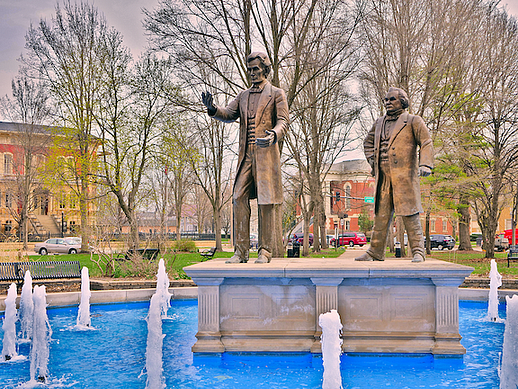
Vera is assigned to debate the amendment at school, tasked with arguing for it. This leads her to over-explain the Lincoln-Douglas debates to a classmate, until she abruptly stops, worried she might be “overheated” — a word she pictures in quotation mark. (Vera thinks a lot in quotation marks, in her attempt to bring the world around her in focus: “comprehension;” “dialogue;” “mirroring;” “raffish” and “pendulous bosom” to cite a few.)
But back to the reference to the historic debates, which within this context is particularly sharp. These historic debates weren’t just about the expansion of slavery; they were fundamentally about who could be a citizen, and what rights that entailed. Stephen A. Douglas opposed Black Americans from becoming citizens. Lincoln pushed back — albeit in a 19th-century way that is too complicated for me to explain on the basis of a Wiki entry.
By evoking these debates, Shteyngart reminds us that the question of who truly belongs, and what level of voice they possess in the American experiment, is a perennial one, constantly revisited and contested.
Citizenship reimagined, legal precedent upended
I want to stop using “chillingly plausible,” but the news keeps writing new dystopias before novelists can. This fictional amendment directly connects to contemporary anxieties and political battles over birthright citizenship. Don’t get me started.
Like the historical debates, and now Shteyngart’s fictional scenario, these discussions are at their core about defining the boundaries of American identity. Shteyngart forces us to confront a potential future where such debates could escalate into concrete, discriminatory policies that fractionalize the very notion of equal participation.
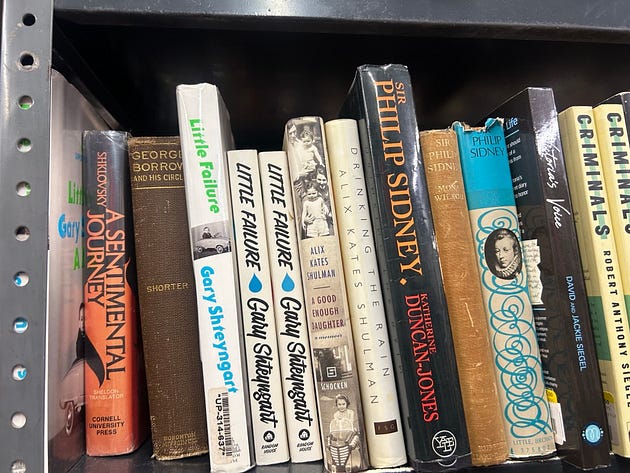
Shteyngart’s Personal Lens on Citizenship: Naturalized, Then Analyzed
Shteyngart’s exploration of these themes is particularly potent given his own background.
In his brilliantly named memoir, Little Failure, Shtenyngart writes movingly/funnily about the moment of departure from the Soviet Union: “my parents’ passports, the rare exit visas that allow Soviet citizens to do the unthinkable — to get on an airplane and exit the best country in the world, the country of workers and strivers.”
Shteyngart’s perspective on citizenship isn’t just theoretical; it’s personal and reflects a profound awareness of its fluidity. After George Bush was elected to a second term, the writer said in an interview with Forward how the political climate led him to take the Canadian citizenship test. I think he was joking.
By weaving together historical echoes, a chilling scenario, and his own immigrant perspective, Gary Shteyngart’s Vera, or Faith offers a sly, smart, and timely commentary on the terms and conditions of citizenship. How can he write a novel that is heart-breaking and heart-warming, satirical yet all-to-real?
So for now, Vera, or Faith will more than do — at least until Shteyngart gives us that martini-swilling, Gulfstream-flying, Patek-wearing, Savile Row-clad legal anti-hero we all deserve.