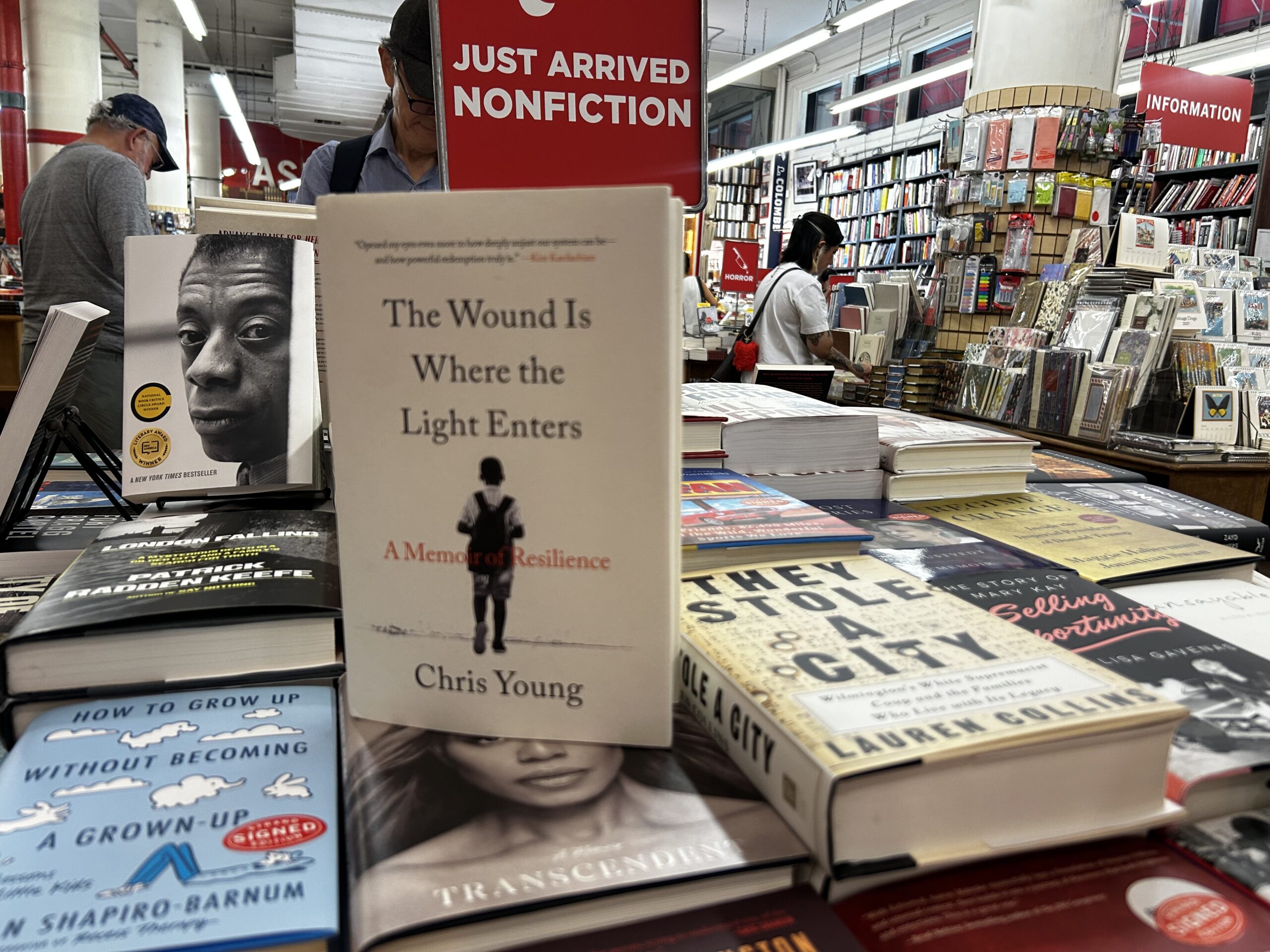
A remarkable memoir about literature, family and the lawyer who finally got it right.
The Wound Is Where the Light Enters: A Memoir of Resilience | Chris Young | Little, Brown & Company (336 Pages)
Most legal thrillers try to build suspense through slick courtroom maneuvers or surprise witnesses. But in his scorching memoir The Wound Is Where the Light Enters, Chris Young reminds us of a harsher reality: in the federal criminal justice system, the real drama often happens before anyone ever steps up to a podium, buried inside mandatory minimum statutes and prosecutor discretion that leave judges completely powerless.
Before you even get to the wiretaps, the 851 enhancements, or the courtroom drama, Young hooks you with the sheer depth and agility of his mind. Stuffed behind a steel toilet bowl in solitary confinement, he finds a tattered paperback copy of Hamlet. What follows isn’t a dry academic analysis. It is a raw, electric realization of language and survival:
“The words in Hamlet were unique; their rhythm flowed like the slickest of lyrics. Reading through it, I lost track of time. Shakespeare’s crazy wordplay reminded me of rap… Constant invention and reinvention. It could’ve been Clarksville.”
Young isn’t an MFA-trained writer crafting polished prose in a vacuum; his voice is vibrant, deeply observant, and organic whether he’s parsing Shakespearean tragedy or describing a childhood home filled with Pine-Sol, I Love Lucy reruns, and smothered pork chops.
Young grew up in Clarksville, Tennessee, amid poverty, addiction, and violence, but also surrounded by unforgettable people, especially his older brother Robert. Their relationship forms the emotional center of the memoir. Robert spends much of his life trying to shield his younger brother from burdens no child should carry, and Young never lets the reader forget that his own story cannot be separated from Robert’s. Their love for one another gives the book much of its heart.
The Mechanics of the “Trial Tax”
The legal disaster begins with what appears to be a relatively small role in a sprawling federal drug investigation. Young calls a dealer known as Da Hero to buy drugs. That single call becomes enough to sweep him into a massive thirty-six-defendant federal conspiracy indictment targeting a drug ring.
That’s where Assistant U.S. Attorney Sunny Koshy enters the picture. When Young refused to cooperate or snitch, exercising his Sixth Amendment right to go to trial, the government filed a 21 U.S.C. § 851 enhancement. Because of two prior nonviolent drug convictions (involving an amount of crack and powder cocaine that, combined, weighed less than three pennies) the § 851 notice triggered a mandatory sentence of life in prison without the possibility of parole.
The genius of Young’s account is how it captures the stripping away of judicial discretion. Presiding Federal Judge Kevin H. Sharp had no desire to send a 22-year-old to die in prison for a nonviolent offense. But statutory mandatory minimums bound his hands.
In the book’s preface, Judge Kevin Sharp writes that his time on the bench forced him to confront how the system was devastating generations of young men of color and, by extension, the families and communities left to carry the weight.
That reckoning crystallizes at Young’s sentencing hearing, when the defendant rises to address the court. He gives a profound speech about his past and the future awaiting him behind bars; he speaks of his love of Greek philosophy (stumbling over names he’d only ever read, never heard spoken aloud), and of the pull of family and the criminal activity that shaped him. Sharp writes he is moved, but bound.
“Under normal circumstances, a judge has the ability to fashion an appropriate sentence based on the facts of a case… When it comes to mandatory minimums, however, the judge is unable to do this; specific prison terms are compulsory.”
The encounter was so crushing that Judge Sharp eventually resigned his lifetime federal judgeship and immediately joined Young’s legal team to fight for his freedom.
Brittany Barnett: Playing Every Angle
If the middle of the book is about how the law traps you, the final stretch is a masterclass in post-conviction advocacy, dominated by attorney Brittany K. Barnett. Barnett didn’t just file papers; she fought on every conceivable front, treating no long shot as too improbable.
Before she even got into the courtroom strategy, Barnett proved she was a force within the prison system itself. When the Bureau of Prisons delayed Young’s medical treatment for his severe sickle cell complications for over a year, Barnett bypassed local administrative delay, calling BOP Central Office directly in Washington, D.C.
It is a moment in the book that honestly stopped me in my tracks and made me cheer. Suddenly, a prison warden was standing at Young’s cell asking, “Who in the fuck is your lawyer, Mr. Young?” after Central Office ordered immediate action, moving his surgery up by months.
Legally, Barnett pursued the narrowest, hardest paths:
- The § 2255 Petition: She convinced both of Young’s original trial attorneys—Bill Bruce and Hallie McFadden—to “fall on their swords” and sign affidavits admitting ineffective assistance of counsel for failing to review the extensive wiretap discovery before trial.
- The White House Long Shot: Recognizing that legal avenues were stacked against federal drug cases, Barnett pushed for presidential clemency. She joined forces with Kim Kardashian, who used her direct access to Jared Kushner, Ivanka Trump, and President Donald Trump to bring Young’s case straight to the Oval Office.
It’s this combination of strict procedural law, fierce medical advocacy, and media-savvy political maneuvering that eventually wins Young his freedom—11 years after his arrest, walking out of prison with Judge Sharp waiting for him at the gates.
The Lawyer at the Table
The Wound Is Where the Light Enters is certainly an indictment of mandatory minimum sentencing and the extraordinary leverage federal prosecutors wield through conspiracy law and sentencing enhancements. But reducing it to a criminal justice memoir undersells what Young has accomplished.
This is, first, a beautifully written, deeply human memoir. Anchoring every page of his youth is the quiet heroism of his older brother, Robert, who took on the adult burden of lugging heavy kerosene bottles up the street to heat their home; a brother whose sacrifices loom so large in Young’s heart that the entire book stands as a lasting monument to him:
“For my brother, Robert Ogburn. Life forced you to carry a heavy load for us, and you did. I am forever grateful. I love you.
Young finds Shakespeare behind a prison toilet. By the end, he has taught readers something equally enduring. Statutes matter. Prosecutors matter. Judges matter. But for most defendants, the law is experienced through the lawyer sitting beside them at counsel table.
Sometimes the difference between hope and despair isn’t another statute or another appeal. It’s the lawyer who reads every page of the file.
The Fine Print: Thanks to NetGalley and Little, Brown and Company for the ARC.