
…And left me wondering about the place of victims’ testimony in sentencing
The Death of Us | Abigail Dean | Viking (336 pages)
A Shift in the Room
The first time I read victim impact statement testimony — during a law school death penalty seminar — I hated it. Not because I didn’t feel for the victim, but because it felt like the courtroom had suddenly shifted. It wasn’t about the law anymore; it was about emotion.
Did powerful testimony lead to harsher punishments for some, even when the crimes were identical? Who was the testimony for? Closure for the victim? For the defendant to learn the pain he caused? Or for justice — the rendering of a just punishment?
The words “Victim Personal Statement,” as it’s known in England, appear just once — in the opening pages — of Abigail Dean’s remarkable new novel The Death of Us.
An investigator broaches the topic of giving such a statement in court to Isobel, the victim of a sadistic, prolonged assault at the hands of the man known as the South London Invader. She deflects, laughing:
“I’ll be sure to make it brief.”
She immediately turns her focus to her now-ex-husband, Edward, who was rendered powerless in the room next to her during the crime.
“Will you be asking Edward?” I said.
“About the personal statement?”
“Yes.”
“We’ll be asking everybody.”
“Oh, you should,” I said. “He loves talking about his feelings.”
That dry, poignant irony from Isobel sets the tone for a novel about what remains unsaid and what is voiced — both in personal relationships and in the justice systems that attempt, imperfectly, to restore order after unspeakable harm.
Two Sides of the Story
Dean’s eloquent, intricately structured thriller uses fiction’s full range to explore the aftermath of a truly unimaginable crime. The story alternates between the perspectives of Edward and Isobel, telling the story of their relationship from courtship through their happy years together.
It renders the encroaching tendrils of grief and horror that destroy the marriage all the more viscerally sad.
As their relationship unravels in the wake of trauma, we see not only the private toll of violence but also its public echoes — in courtrooms, careers, and families.
No Jury Present
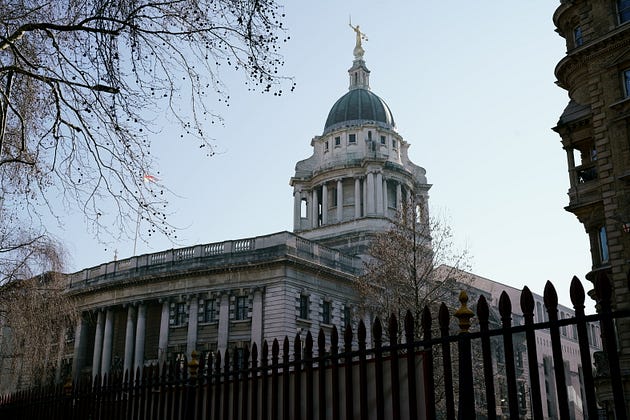
The legal thread of the story culminates in a sentencing hearing at London’s Old Bailey. The rapist, now caught and having pleaded guilty to multiple crimes, will face victims and survivors like Isobel and Edward as they prepare to deliver their personal statements in court.
It’s a sentencing hearing in front of a judge, not a trial. No jury will be swayed. But the moment still holds enormous emotional weight.
There’s a passage late in the novel where Edward describes the rapist standing in court, unmoving, staring into space. Does he even hear the words spoken by his victims? Do the statements matter?
Maybe not to him.
But maybe they’re not for him. Maybe they’re for everyone else.
Victim Impact Statements: A Deeply Unscientific Legal Review
And here’s the thing. As much as Dean’s novel wrecked me — with its portrait of grief and its insistence on giving voice to survivors — I’m still not convinced the courtroom is the right place for that voice to be heard.
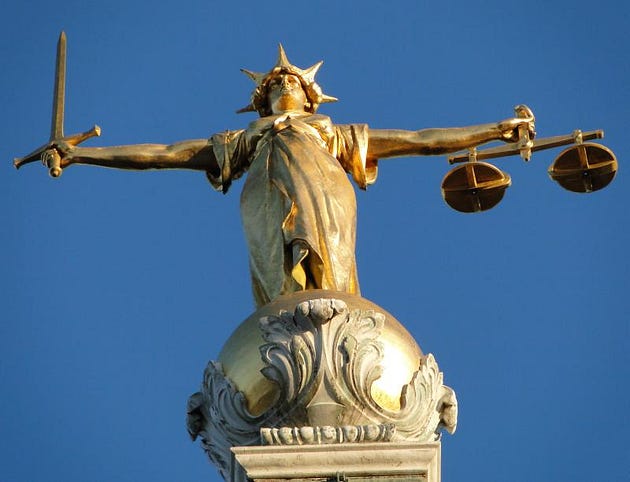
The book makes a powerful emotional case for victim statements, but even in its most affecting moments, I couldn’t shake the worry: that justice shaped by personal grief risks becoming something inconsistent, subjective, even unfair.
As a legal nerd, I did a quick dive into the research — okay, more Google than Westlaw. I vaguely remembered reading some of the same cases back in law school.
It’s worth noting that this isn’t legally uncharted territory. Case law is settled: victim impact statements are admissible at sentencing, and courts have repeatedly affirmed their role in helping judges understand the full consequences of a crime. The legal system has made space for these voices — though not without ongoing debate about how much weight they should carry.
Still, it’s not without controversy. Some legal scholars argue against using victim impact statements in sentencing because they believe justice should remain neutral, treating crime as an offense against society rather than the individual.
There is a concern that emotional or well-spoken victims could unintentionally lead to harsher punishments than cases with quieter or less articulate victims, even when the crimes are identical.
These statements might also shift focus away from the facts of the case, placing emotional weight on the victim’s experience rather than the defendant’s actions. Defendants, unable to respond without appearing insensitive, risk unfair sentencing based on emotion rather than evidence.
A Reasonable Doubt
The book doesn’t explicitly advocate for victim statements. I wondered if Edward, a corporate lawyer in London — who does not, of course, love to talk about his feelings — harbored similar concerns.
At one point, Isobel comes across pro bono documents in his office: Edward was assisting in the death row appeal of a convicted murderer and rapist. In law school, where he was admittedly “insufferable,” he had once written an essay on what are known in England as whole-life orders, and in the U.S. as L-WOP (Life Without Parole).
It was “a clever enough piece. He had argued them unjust.”
Where the Law Stops Talking and Fiction Starts
I closed The Death of Us deeply moved. Dean gives voice to pain that the justice system often fails to acknowledge, and she does so with compassion and artistry. Maybe that’s why the novel lingers. It doesn’t settle the question of whether victim impact statements belong in court — it just makes it harder to ignore.
Maybe justice can’t hold what grief asks it to carry. Maybe that burden belongs somewhere else — somewhere literature, not law, can bear it.
“Thank you so much for reading – I loved your insights on impact statements. I’m sure Edward would agree! This legal fiction resonates deeply with the themes you explored.”
—Abigail Dean, Author